English
 简体中文
简体中文
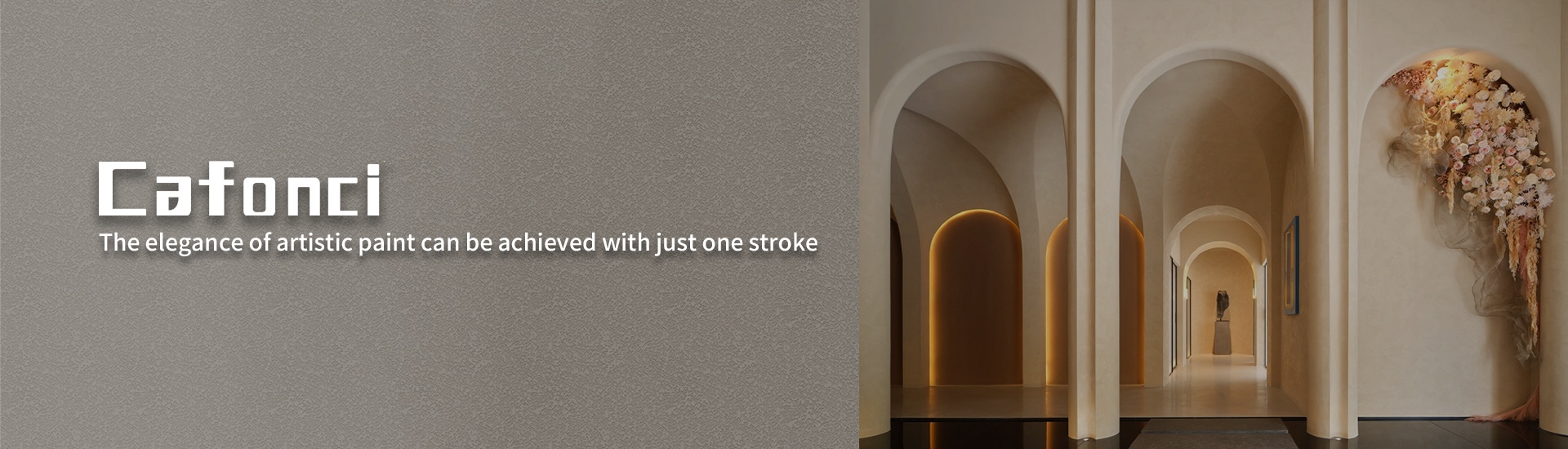
.jpg "The Hidden Truth About Matte Stone Paint: Why It’s Changing Interior Design Forever(图1)")
For years, glossy finishes dominated interior design—their shiny surfaces promised a “luxury” look that reflected light and made spaces feel bigger. But lately, a quieter revolution has taken hold: matte stone paint. It’s not just a trend; it’s a shift in how we think about walls—from something to look at to something to *experience*. But what’s the hidden truth behind its rise? Why is this finish changing interior design forever?
Let’s start with texture—the most obvious yet underappreciated superpower of matte stone paint. Unlike flat latex or mirror-like gloss, matte stone paint has a subtle, mineral-based texture: tiny particles of quartz,长石 (feldspar), or clay that create a finish that’s *tactile*. Run your fingers over a wall coated in it, and you’ll feel a soft, earthy grain—nothing harsh, nothing artificial. Visually, this texture adds depth: instead of bouncing light like a mirror, it absorbs it gently, creating shadows that make the wall feel like a three-dimensional element, not a flat backdrop. In a world obsessed with “smooth” and “perfect,” this tactile quality is revolutionary. A living room wall in matte stone paint doesn’t just “exist”—it invites interaction, turning a functional surface into a sensory experience.
Then there’s durability—the secret weapon that makes matte stone paint more than a pretty face. Most people assume matte finishes are fragile: easy to scratch, hard to clean, doomed to show every fingerprint. But matte stone paint defies that stereotype. Its mineral composition (think natural stones ground into a fine powder) makes it inherently resistant to scratches, scuffs, and chipping. Add modern advancements like stain-resistant coatings, and you get a finish that’s practically bulletproof for high-traffic areas. A family in Chicago recently used matte stone paint in their playroom: after 18 months of crayon marks, juice spills, and paw prints from their golden retriever, the walls still look brand new. “We were scared to use matte at first,” says homeowner Sarah Miller, “but it’s held up better than any gloss we’ve ever used.”
But the real magic of matte stone paint is its versatility—it’s the chameleon of design styles. Want a minimalist bedroom? A soft beige matte stone paint creates a calm, neutral base that lets your linen sheets and wooden furniture shine. Going for industrial chic? A deep gray matte finish pairs with exposed brick and metal fixtures to add warmth without sacrificing edge. Even bold colors work: a forest green matte accent wall in a dining room feels rich and inviting, not overwhelming—because the matte finish diffuses the color instead of amplifying it. Interior designer Emma Lopez puts it best: “Matte stone paint doesn’t compete with your decor. It elevates it. You can use it in a bohemian living room or a traditional kitchen, and it always fits.”
There’s also a psychological edge. Studies show that matte finishes reduce visual clutter: by absorbing light instead of reflecting it, they minimize glare and create a more relaxing atmosphere. A 2023 study from the University of Helsinki found that people in rooms with matte walls reported 15% lower cortisol levels than those in glossy rooms—small change, big impact on well-being. For bedrooms, this means better sleep; for home offices, fewer distractions. “I used matte stone paint in my home studio,” says writer Lisa Chen, “and I immediately noticed I could focus longer. The walls don’t fight with my computer screen—they just… support me.”
Let’s bust one more myth: matte stone paint isn’t “boring.” The idea that matte equals flat is a relic of outdated formulas. Modern matte stone paint has *depth*—the subtle texture catches light in ways that glossy finishes never can. A wall in soft gray matte stone paint doesn’t look “plain”; it looks like a piece of weathered stone, with nuances that shift as the day goes on. It’s quiet, but it’s not invisible.
So why is matte stone paint changing interior design forever? Because it’s not just a finish—it’s a philosophy. For decades, we chased shine: glossy cabinets, mirrored walls, polished concrete. We wanted spaces that looked “expensive” and “perfect.” But now, we’re craving something more: spaces that feel *human*. Spaces that invite touch, that handle real life, that don’t make us feel like we have to “keep up” with them. Matte stone paint delivers that. It’s imperfect in the best way—textured, durable, and alive with subtlety.
A few years ago, I visited a friend’s apartment in Brooklyn. She’d used matte stone paint in her living room—warm taupe with a hint of terracotta. When I walked in, I didn’t immediately notice the walls. But after a few minutes, I realized they were the heart of the space. The sofa looked cozier against them. The sunlight filtering through the windows felt softer. Even the sound of her laugh echoed differently—warmer, more present. “It’s not about making the walls stand out,” she told me. “It’s about making everything else stand out *better*.”
That’s the hidden truth. Interior design isn’t about making rooms look “good.” It’s about making them feel *right*. Matte stone paint gets that. It’s not flashy. It’s not trendy. It’s *real*. And in a world where “real” is becoming more valuable than “perfect,” that’s why it’s here to stay.
The next time you’re considering a wall finish, ask yourself: Do I want a surface that reflects everything, or one that absorbs life? Do I want something that looks perfect for a month, or something that grows with me for years? If you choose the latter, matte stone paint is your answer. It’s not just changing interior design—it’s changing how we live.