English
 简体中文
 لالعربية
Products Description


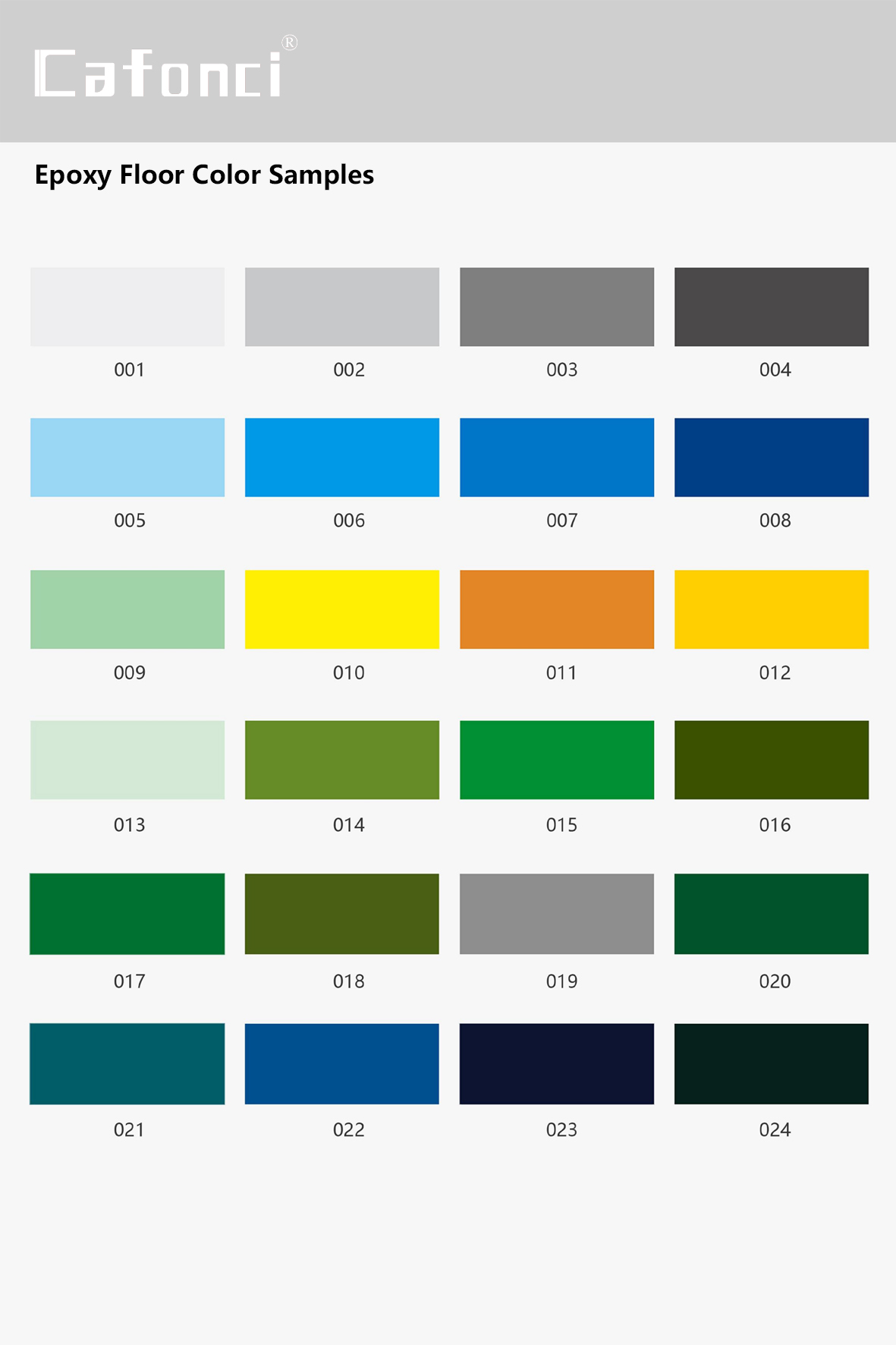


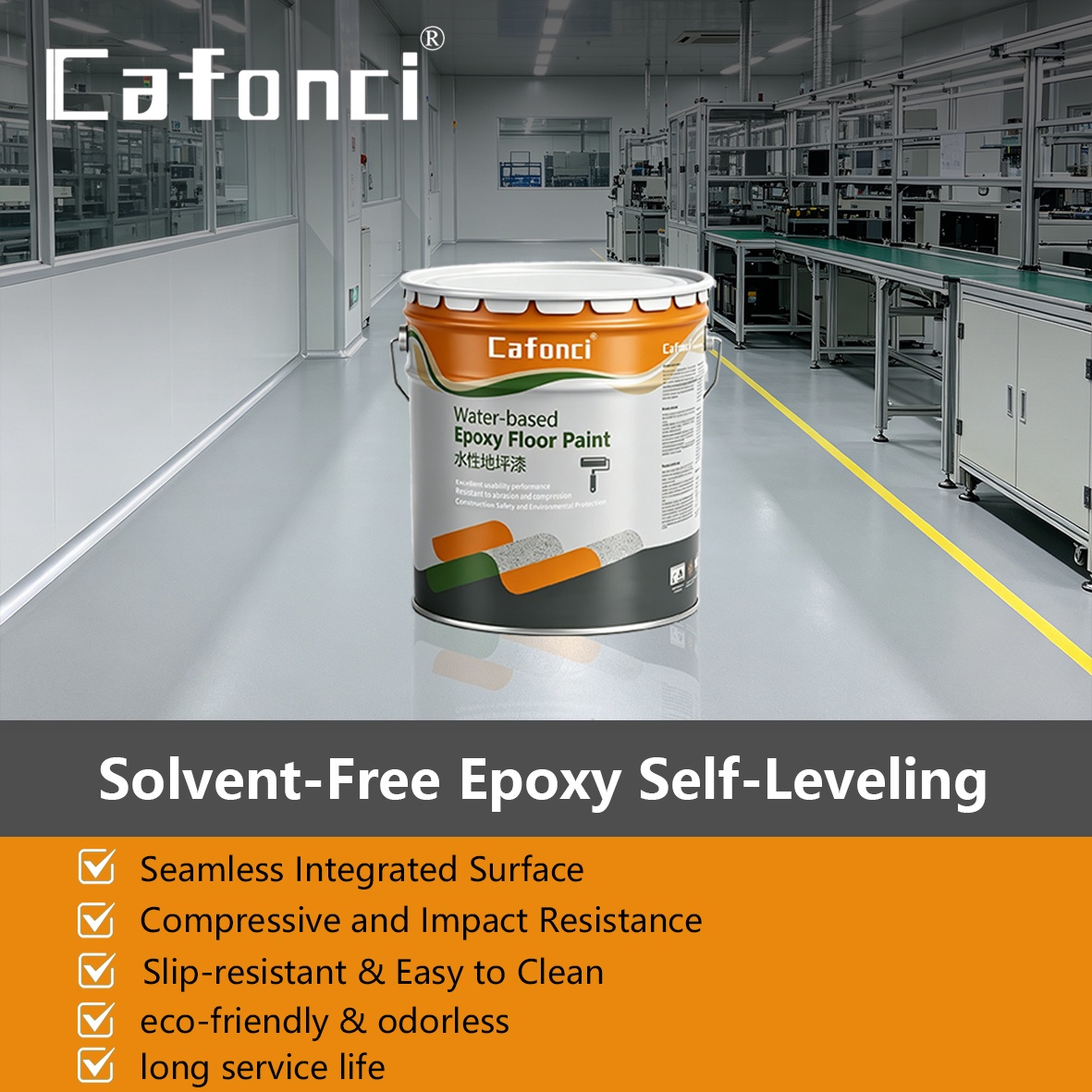
Cafonci 无溶剂环氧自流平地坪涂料

Cafonci 无溶剂环氧自流平地坪涂料
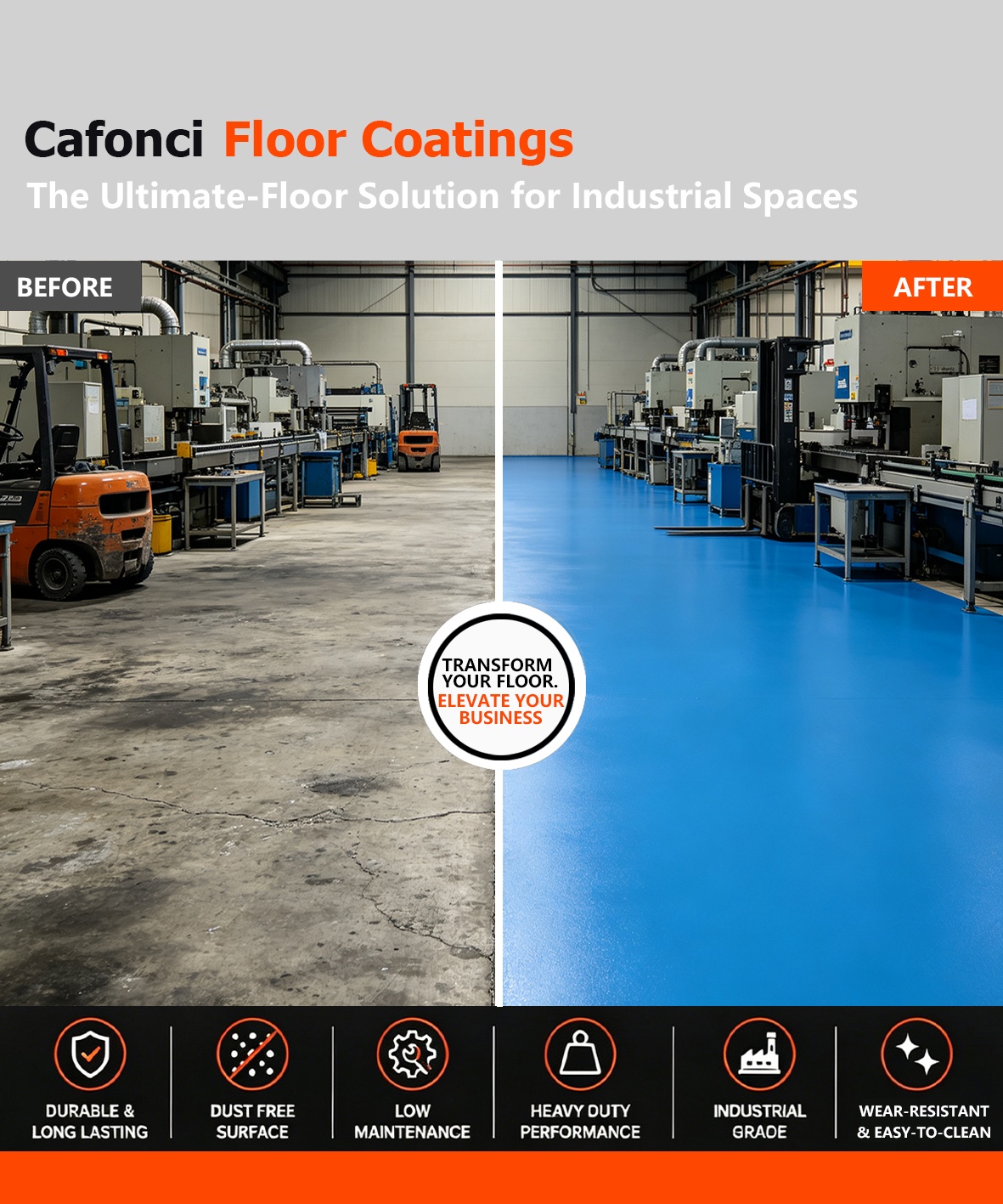
Cafonci 无溶剂环氧自流平地坪涂料

Cafonci 无溶剂环氧自流平地坪涂料
Cafonci产品广泛应用于住宅区、物业、房地产、交通设施、学校、购物中心、街道、酒店、停车场、工厂、制药公司及其他场所
What is Cafonci Anti-Static Epoxy Resin Self-Leveling?
What is Cafonci Anti-Static Epoxy Resin Self-Leveling?
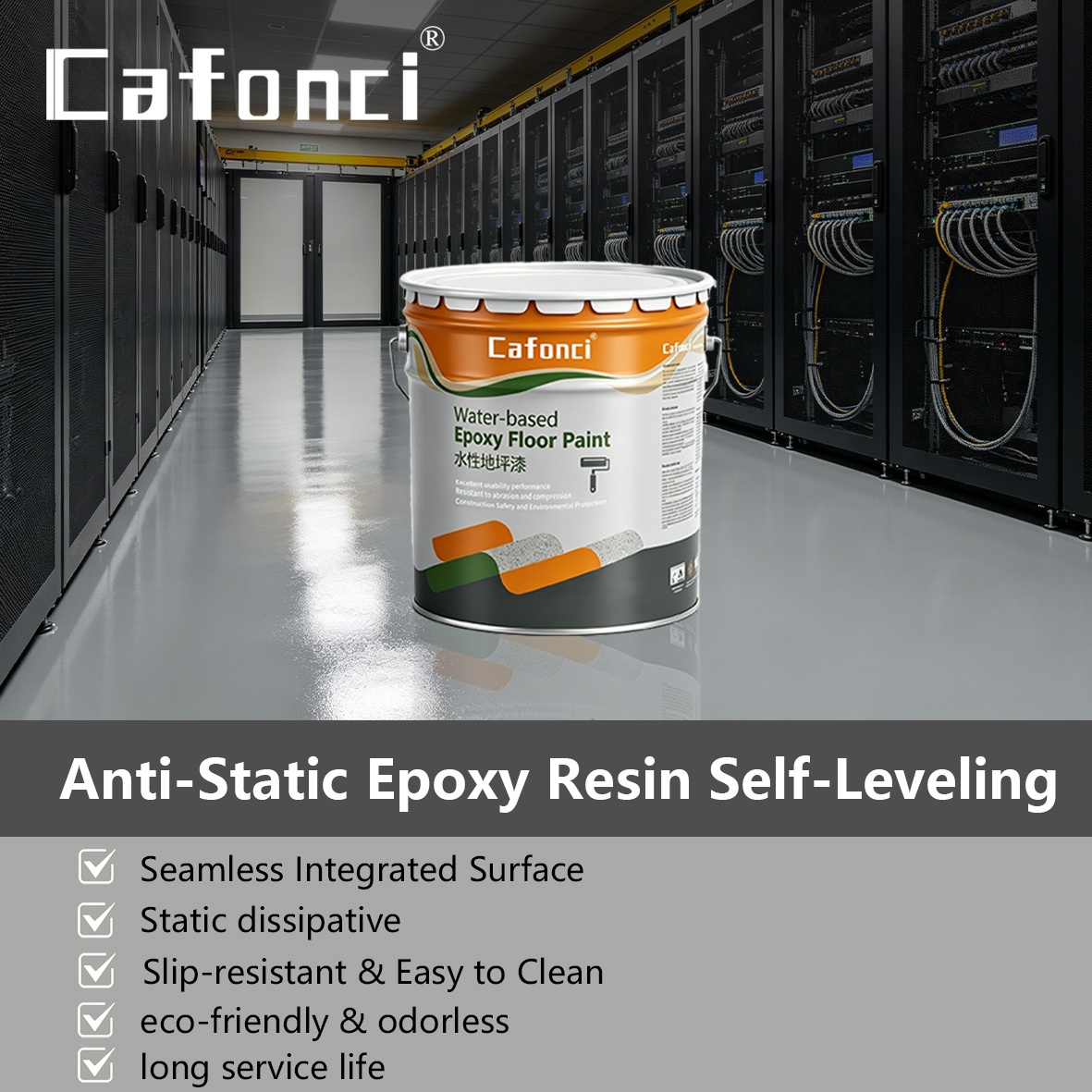
Cafonci Anti-Static (ESD) Epoxy Resin Self-Leveling Floor Paint is a specialized, functional two-component resin topcoat designed to safely discharge and dissipate electrostatic buildup. It creates a seamless, durable, self-leveling conductive or dissipative floor surface that protects sensitive electronic equipment and prevents static-related damage.
What are the main product features of Cafonci Anti-Static Epoxy Resin Self-Leveling?
What are the main product features of Cafonci Anti-Static Epoxy Resin Self-Leveling?
Key features include: effective electrostatic discharge (ESD) performance, seamless self-leveling surface, excellent abrasion & chemical resistance, stable surface resistance (typically 10⁵–10⁹ Ω), dust-free and easy to clean, high mechanical strength, and long-term conductive stability. Ideal for static-sensitive environments.
Where can Cafonci Anti-Static Epoxy Resin Self-Leveling be used?
Where can Cafonci Anti-Static Epoxy Resin Self-Leveling be used?
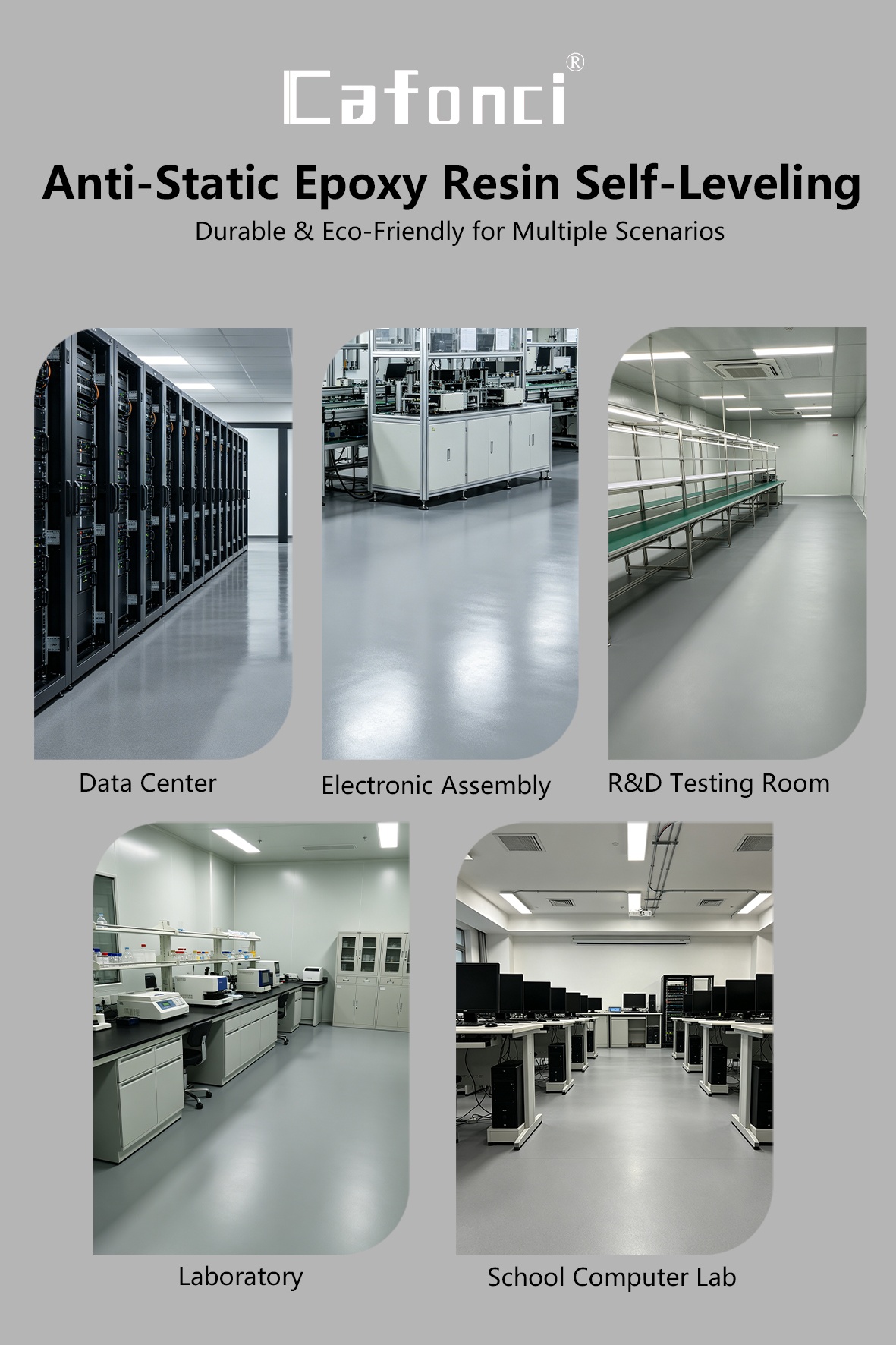
Perfect for electronics manufacturing workshops, semiconductor plants, cleanrooms, data centers, computer rooms, pharmaceutical facilities, laboratories, telecommunications equipment areas and any indoor space requiring static control to protect sensitive components and ensure safety.
How to install Cafonci Anti-Static Epoxy Resin Self-Leveling step by step?
How to install Cafonci Anti-Static Epoxy Resin Self-Leveling step by step?
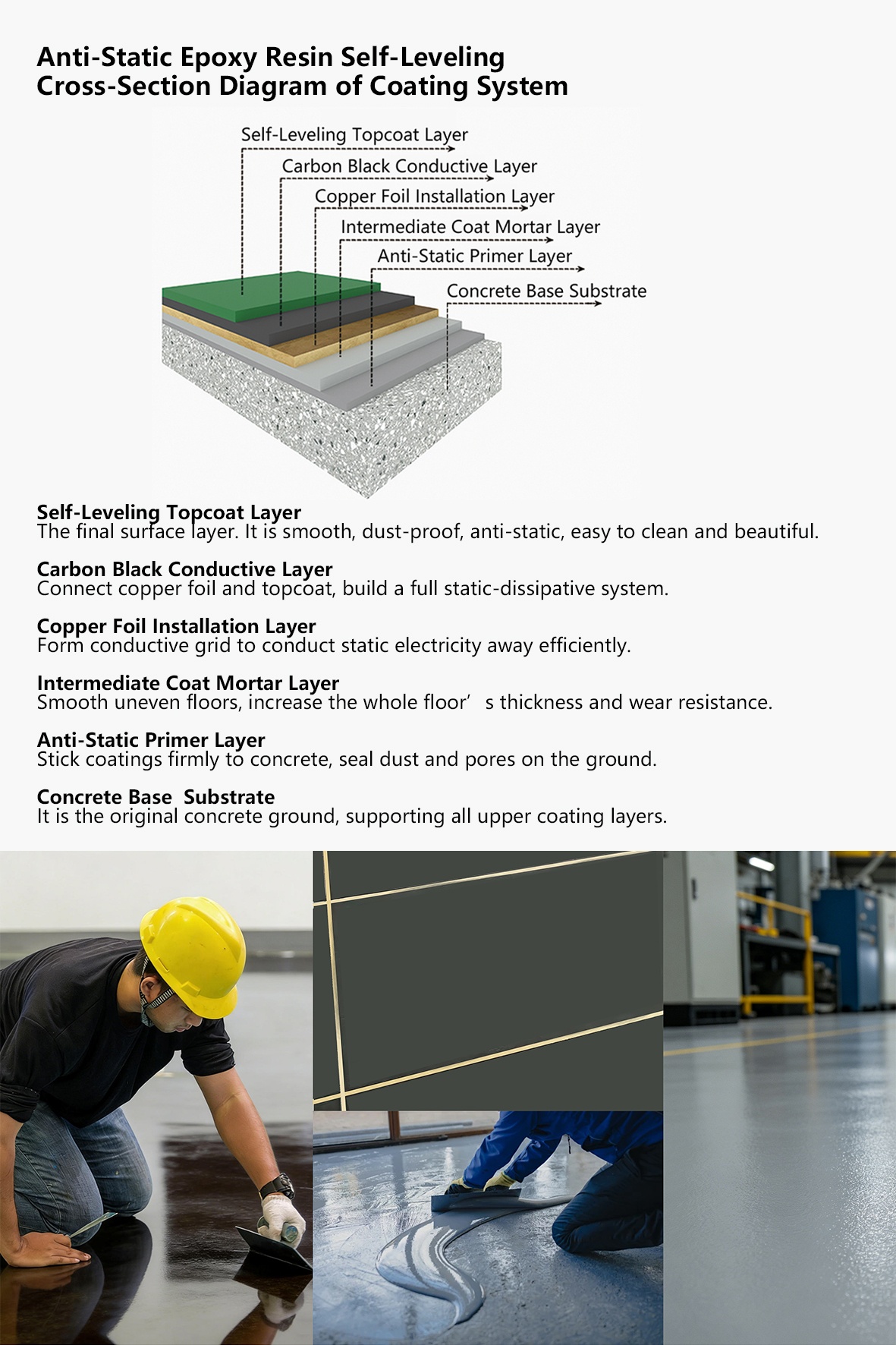
1. Prepare substrate (grind, clean, repair, ensure dry & level). 2. Apply conductive primer. 3. Install copper grounding tape/grid as designed. 4. Apply conductive intermediate layer if required. 5. Mix resin + hardener thoroughly according to ratio. 6. Pour and spread self-leveling topcoat with notched trowel. 7. Use spike roller to remove bubbles. 8. Allow full curing and test surface resistance.
What is the typical surface resistance of Cafonci Anti-Static Epoxy Resin Self-Leveling?
What is the typical surface resistance of Cafonci Anti-Static Epoxy Resin Self-Leveling?
The surface resistance is typically controlled within 10⁵–10⁹ Ω (dissipative range) to safely discharge static electricity while remaining safe for personnel. Exact values should be verified after installation according to project specifications and international standards (e.g. ANSI/ESD S20.20 or equivalent).
Why is copper tape needed in the anti-static system?
Why is copper tape needed in the anti-static system?
Copper grounding tape (or conductive grid) is laid on the primed surface and connected to the building’s grounding system. It creates a continuous conductive path so that static charges collected by the anti-static epoxy floor can be safely discharged to earth, ensuring stable and reliable ESD performance.
How much coverage does Cafonci Anti-Static Epoxy Resin Self-Leveling provide?
How much coverage does Cafonci Anti-Static Epoxy Resin Self-Leveling provide?
Coverage typically ranges from 1.5–3.0 kg/m² depending on system thickness (usually 1.5–3 mm finished). Always refer to the specific product TDS and calculate based on actual thickness, substrate condition and system design (primer + intermediate + topcoat).
How long does it take to dry and cure?
How long does it take to dry and cure?
Touch dry: approx. 6–12 hours; foot traffic: 24–48 hours; light use: 3–5 days; full cure and resistance testing: 7 days (at 25°C / 50% RH). Temperature and humidity affect curing. Avoid heavy loads before full cure.
Is Cafonci Anti-Static Epoxy Resin Self-Leveling durable?
Is Cafonci Anti-Static Epoxy Resin Self-Leveling durable?
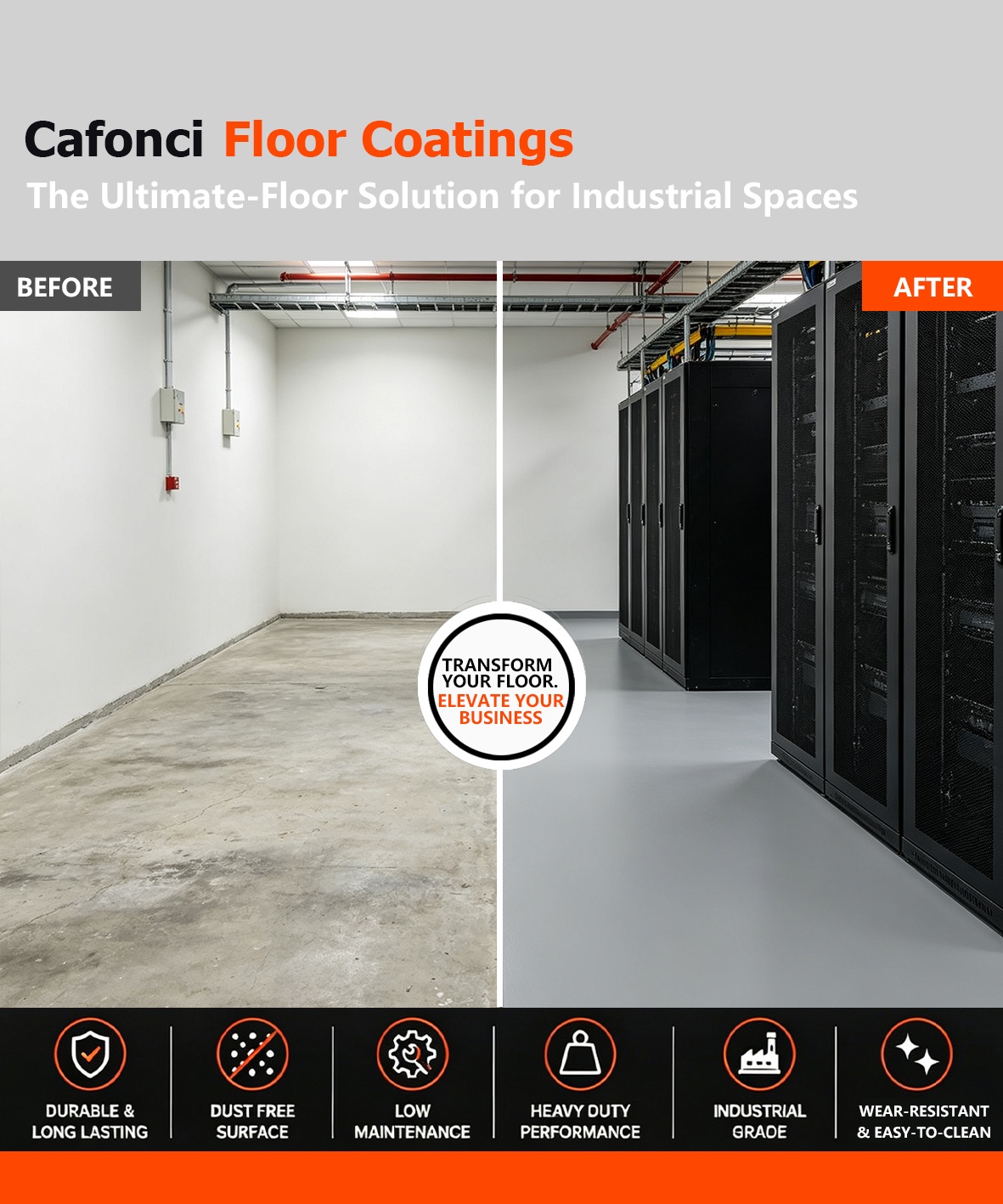
Yes. As a high-performance epoxy system, it offers excellent abrasion, impact and chemical resistance while maintaining stable anti-static properties. Properly installed floors typically last 8–15+ years in industrial and cleanroom environments with correct maintenance.
Can I DIY install Cafonci Anti-Static Epoxy Resin Self-Leveling?
Can I DIY install Cafonci Anti-Static Epoxy Resin Self-Leveling?
Not recommended. Anti-static systems require precise surface preparation, correct copper tape layout, accurate mixing, controlled application and post-installation resistance testing. Professional installation by trained contractors is strongly advised to ensure reliable ESD performance and compliance with standards.
How to test if the anti-static floor works properly?
How to test if the anti-static floor works properly?
After full cure, measure surface-to-ground resistance and point-to-point resistance using a calibrated megohmmeter according to relevant standards (e.g. ANSI/ESD or IEC). Typical target is 10⁵–10⁹ Ω. Regular periodic testing is recommended to confirm ongoing performance.
How to maintain Cafonci Anti-Static Epoxy Resin Self-Leveling floor?
How to maintain Cafonci Anti-Static Epoxy Resin Self-Leveling floor?
Sweep or vacuum regularly with non-static generating tools, mop with mild neutral detergent and water. Avoid wax, oil-based cleaners or insulating materials that may affect conductivity. Keep the surface clean and dry. Periodic resistance testing helps ensure long-term ESD performance.
What substrate preparation is required?
What substrate preparation is required?
Concrete must be clean, dry (moisture preferably
Why choose anti-static epoxy self-leveling over regular epoxy?
Why choose anti-static epoxy self-leveling over regular epoxy?
Regular epoxy is insulating and can accumulate static charges, risking damage to sensitive electronics. Cafonci Anti-Static Epoxy Resin Self-Leveling actively dissipates static electricity, providing both the durability of epoxy and the necessary electrostatic protection for ESD-sensitive environments.
Is the anti-static performance permanent?
Is the anti-static performance permanent?
When properly installed with a complete grounding system and maintained correctly, the conductive network remains stable for many years. Surface wear or contamination can affect readings, so regular cleaning and periodic resistance testing are recommended to verify ongoing performance.